


We've been looking into essential amino acids (EAAs) and how they might fit into our fitness routines. It seems these nine amino acids, which our bodies can't make on their own, are quite important for muscle, energy, and more. This guide breaks down what EAAs are, why they're talked about so much, and how we can use them effectively to support our training and recovery goals. We'll be focusing on eaas for muscle growth and recovery, looking at the science behind it all.
Key Takeaways
-
Essential amino acids (EAAs) are the nine building blocks our bodies can't produce but need for muscle repair, growth, and overall bodily functions. Without them, our training and recovery can really suffer.
-
EAAs are more beneficial for complete muscle support than BCAAs alone because they provide all the necessary components for muscle protein synthesis, not just a few.
-
For those who train regularly, especially with weights, EAAs are important for kickstarting recovery and maintaining muscle. They can also help endurance athletes.
-
Getting EAAs from food sources like meat, fish, eggs, and dairy is ideal, but plant-based eaters or those on calorie-restricted diets might find supplements a convenient way to ensure they meet their needs.
-
Supplementing with EAAs can help lessen post-workout soreness and fatigue, allowing us to get back to training sooner and feel better during our workouts.
Understanding Essential Amino Acids
Right then, let's get stuck into what these essential amino acids, or EAAs, are all about. We hear them mentioned a lot, especially when we're talking about fitness and muscle building, but what exactly are they and why should we care? Essentially, EAAs are the fundamental building blocks for protein in our bodies. The 'essential' bit is key here – it means our bodies can't actually produce them on their own. We have to get them from our diet, which is why they're so important.
The Nine Vital Building Blocks
There are nine specific amino acids that fall into the 'essential' category. These are: histidine, isoleucine, leucine, lysine, methionine, phenylalanine, threonine, tryptophan, and valine. Think of them as the complete set of tools needed for various bodily functions, not just muscle repair. Without all nine, our bodies can't perform certain tasks as efficiently as they should. It's a bit like trying to build something complex with only half the instructions; you're going to run into problems.
Why EAAs Are Essential For The Body
Beyond just muscle growth, these nine amino acids are involved in a whole host of processes. They're needed for making enzymes and hormones, supporting immune function, and even helping our brains work properly by acting as precursors to neurotransmitters. For instance, phenylalanine is used to create dopamine and norepinephrine, which are pretty important for mood and focus. So, it's not just about hitting the gym; EAAs play a role in our overall health and well-being, keeping everything ticking over smoothly.
EAAs Versus BCAAs: A Comprehensive View
You might have heard of BCAAs – branched-chain amino acids. These are leucine, isoleucine, and valine, and they are indeed part of the EAA family. However, BCAAs are just three out of the nine essential amino acids. While they're often highlighted for their role in muscle protein synthesis, they can't do the whole job alone. Research suggests that while BCAAs can kickstart the process, it stalls if the other EAAs aren't present. So, for complete muscle repair and growth, a full spectrum of all nine EAAs is generally considered more beneficial, providing all the necessary components for the body to work with.
Here's a quick way to see the difference:
|
Feature |
Essential Amino Acids (EAAs) |
Branched-Chain Amino Acids (BCAAs) |
|---|---|---|
|
Number of Amino Acids |
Nine |
Three (Leucine, Isoleucine, Valine) |
|
Body Synthesis |
Cannot be produced by the body |
Cannot be produced by the body |
|
Completeness |
Provides all building blocks |
Provides only a portion |
So, while BCAAs are important, focusing on essential amino acids gives you the full picture for supporting your body's needs.
The Role of EAAs in Muscle Growth
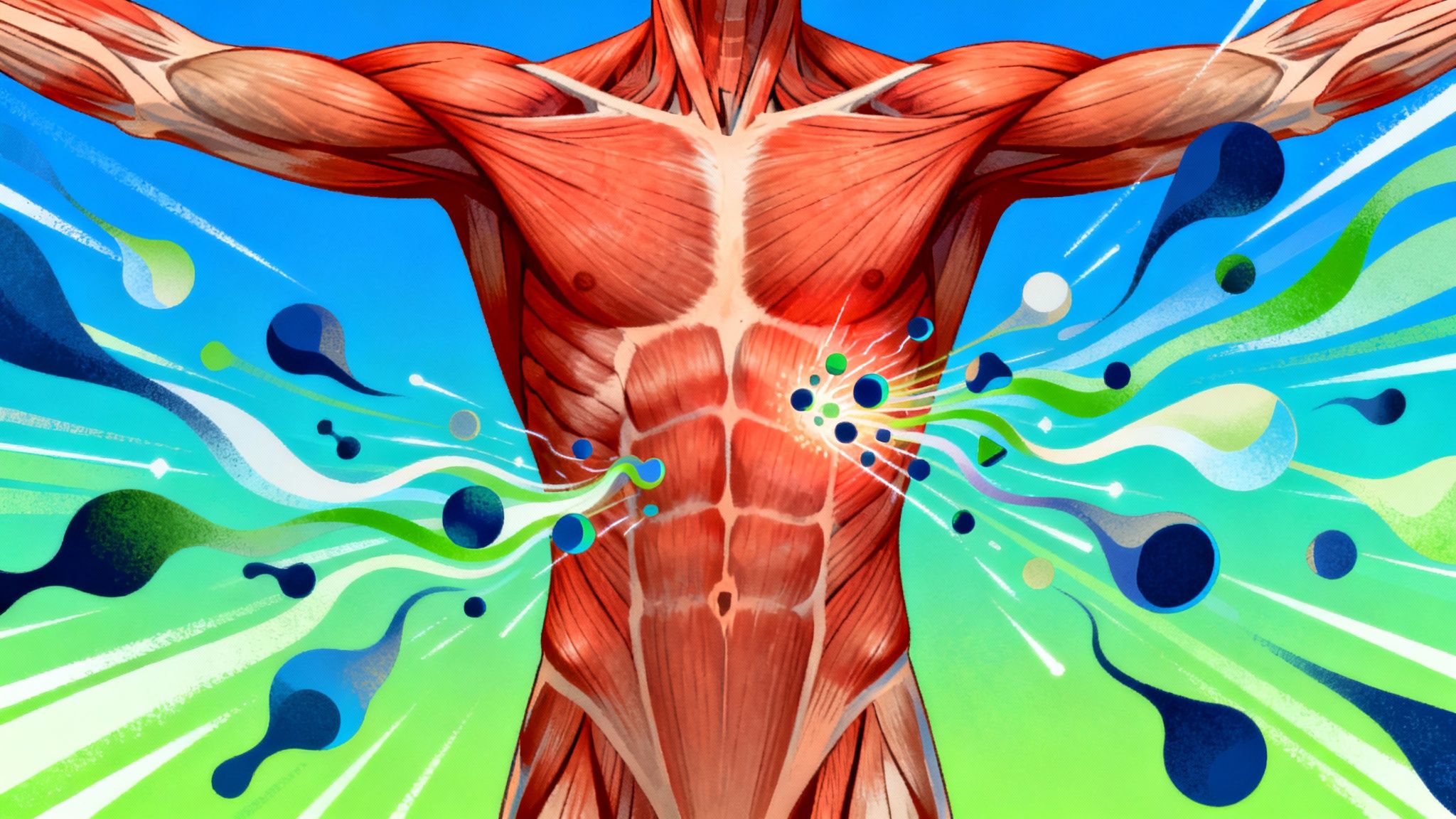
When we're looking at how to use EAAs for gains, it's really about understanding their direct impact on muscle building. Essential amino acids (EAAs) are the fundamental building blocks for muscle tissue. They play a direct role in muscle protein synthesis (MPS), the process by which our bodies build and repair muscle. Think of them as the bricks and mortar for your muscles; without them, construction just can't happen effectively.
Stimulating Muscle Protein Synthesis
EAAs are the direct precursors to muscle protein. When you exercise, especially with resistance training, you create micro-tears in your muscle fibres. To repair these and make them stronger, your body needs a sufficient supply of EAAs. Leucine, in particular, is known to be a key trigger for MPS, essentially signalling the body to start the repair and growth process. Without enough EAAs, this whole process can be significantly slowed down, impacting how well your muscles can grow and recover.
Leucine's Crucial Role in Muscle Building
Leucine is one of the three Branched-Chain Amino Acids (BCAAs), but it's often highlighted for its unique ability to activate the mTOR pathway. This pathway is a major regulator of protein synthesis, playing a critical role in cellular growth, proliferation, and metabolism. While BCAAs, and leucine in particular, have been popular in the fitness community for a while due to their anabolic signaling capabilities, it's important to remember that they are only a part of the EAA picture. A complete EAA supplement provides all nine essential amino acids, which are the fundamental building blocks required to fully complete the muscle repair and synthesis process, not just initiate it. Think of it this way: so, while leucine gets the ball rolling by signalling the start of muscle protein synthesis, the other EAAs are the necessary components that are then recruited to actually build and finish the job, ensuring comprehensive muscle recovery and growth.
Completing The Muscle Repair Process
While leucine is a powerful signal, it can't do all the work alone. For effective muscle repair and growth, all nine EAAs must be present. If even one is missing, the entire process of muscle protein synthesis can be limited. This is why a full spectrum of amino acid supplements for muscle repair is generally considered more beneficial than relying on BCAAs alone. They provide the complete toolkit your body needs to rebuild muscle tissue efficiently after a tough workout. This makes them a great option for those looking for lean muscle growth supplements.
Accelerating Recovery and Reducing Soreness

We've all been there – that lingering ache after a particularly tough workout. It's the price we sometimes pay for pushing our limits, but it doesn't have to be the norm. Essential amino acids (EAAs) can play a significant role in helping us bounce back faster and feel less sore.
Mitigating Delayed Onset Muscle Soreness (DOMS)
That feeling of stiffness and pain that kicks in a day or two after exercise is known as DOMS. It's essentially a sign of microscopic damage to our muscle fibres. Research suggests that supplementing with EAAs can help to lessen the severity of this soreness. By providing the body with the necessary building blocks, EAAs can aid in the repair process, potentially reducing the inflammatory response that contributes to DOMS. Studies have indicated that EAA supplementation may reduce exercise-induced muscle damage and lessen delayed-onset muscle soreness. This means we might be able to get back to our training routine with less discomfort.
Preserving Muscle Strength Post-Exercise
Intense exercise can temporarily reduce our muscle strength. This isn't just about feeling weaker; it can impact subsequent training sessions. EAAs help in the recovery and repair of muscle tissue, which is vital for restoring muscle strength. When our muscles have the amino acids they need, they can rebuild more efficiently, helping to preserve strength levels after strenuous activity. This is particularly important for athletes and regular exercisers who need to maintain performance over time.
Supporting Energy Production and Combating Fatigue
Beyond muscle repair, EAAs also contribute to our overall energy levels. During prolonged exercise, when our glycogen stores might be running low, EAAs can be used as an alternative fuel source. This metabolic flexibility can help delay the onset of fatigue, allowing us to perform for longer. Furthermore, EAAs are precursors to neurotransmitters, which can influence mood and mental alertness, indirectly combating feelings of tiredness. Ensuring we have adequate EAAs can support sustained energy throughout the day and during workouts.
Here's a quick look at how EAAs help with recovery:
-
Muscle Repair: They provide the building blocks needed to fix damaged muscle fibres.
-
Reduced Soreness: They can help mitigate the inflammation associated with DOMS.
-
Strength Preservation: They aid in restoring muscle function more quickly.
-
Energy Support: They can be used as fuel during prolonged exertion, delaying fatigue.
We've found that incorporating EAAs into our routine, especially around training times, seems to make a noticeable difference in how quickly we recover and how much less sore we feel the next day. It's like giving our bodies a head start on the repair work.
Who Benefits Most from EAA Supplementation?
It's easy to think that essential amino acids (EAAs) are just for the hardcore gym-goers, but that's really not the case. We all need these nine vital compounds because our bodies can't make them on their own. However, certain groups of people might find that an EAA supplement offers some particularly helpful advantages.
Athletes and Regular Exercisers
If you're someone who trains regularly, especially with weights, EAAs are pretty important. They're the basic building blocks for muscle protein synthesis, which is how our muscles fix themselves and grow after a workout. Without enough EAAs, this whole process can slow down. Taking an EAA supplement can help make sure your body has what it needs to start recovering and keep your muscles in good shape, even between tough training sessions. This is also true for endurance athletes who need sustained energy and muscle protection.
Individuals with Dietary Restrictions
People following specific diets, like veganism or vegetarianism, might find it a bit harder to get a full range of EAAs from their food. While plant-based diets are great, some protein sources might be a bit low in certain EAAs. For example, a vegan diet might need a little help to bridge this gap. Also, if you're on a diet to cut calories, you might struggle to eat enough protein. In this situation, EAA supplements can be a practical way to keep your lean muscle mass without adding a lot of extra calories.
Older Adults and Muscle Health
As we get older, our bodies can become less efficient at using protein. This means that maintaining muscle mass can become more challenging. Ensuring an adequate intake of EAAs is important for supporting muscle health and function in older adults. Studies suggest that EAAs can help stimulate muscle protein synthesis, which is key for preventing age-related muscle loss.
It's worth remembering that while supplements can be incredibly useful, they're designed to supplement a healthy diet, not replace it. Getting your EAAs from whole foods is always the first and best option.
Optimising EAA Intake
So, we've covered why essential amino acids (EAAs) are so important for muscle growth and recovery. Now, let's talk about how we can actually get enough of them into our diets and supplement routines. It's not always as straightforward as you might think, but with a bit of planning, we can make sure our bodies are getting the building blocks they need.
Dietary Sources of Essential Amino Acids
Our first port of call should always be whole foods. They provide a complete package of nutrients, and thankfully, many common foods are packed with EAAs. Animal products are generally considered 'complete proteins' because they contain all nine EAAs in good proportions. This includes:
-
Beef
-
Poultry (like chicken and turkey)
-
Fish (such as salmon and cod)
-
Eggs
-
Dairy products (milk, cheese, and yogurt)
For those following plant-based diets, getting a full spectrum of EAAs requires a bit more attention. While some plant foods like soy products (tofu, tempeh), quinoa, and buckwheat are complete proteins, many others might be lower in one or two specific EAAs. The good news is that by eating a variety of plant-based foods throughout the day – think legumes, nuts, seeds, and grains – we can effectively get all the EAAs we need. For example, combining rice and beans is a classic way to ensure a balanced intake.
Making sure we consume enough EAAs daily is key for overall health and bodily functions. It's not just about muscle building; EAAs are involved in countless processes, from neurotransmitter production to immune function.
Considering EAA Supplements
While we can get EAAs from food, there are times when supplementation might be beneficial. This is particularly true for athletes, individuals with dietary restrictions, or older adults concerned about muscle health. Supplements offer a convenient way to ensure we're hitting our targets, especially around training times. Research suggests that consuming around 10-20 grams of EAAs can be effective for stimulating muscle protein synthesis. When choosing a supplement, look for products that provide all nine EAAs, rather than just BCAAs, as this offers a more complete profile for muscle repair and growth.
Timing Your EAA Intake
When we take our EAAs can also play a role in optimising their benefits. While it's not the be-all and end-all, consuming EAAs before, during, or immediately after exercise can help support muscle protein synthesis and recovery. For instance, taking a dose of 6-15 grams of EAAs, including 3-5 grams of leucine, around your workout can be beneficial. Some people also find that taking EAAs between meals can help maintain a positive nitrogen balance, which is important for muscle preservation. Ultimately, consistency is key, so finding a timing strategy that fits into our daily routine is most important.
Wrapping It Up
So, there we have it. We've looked at what EAAs are, why they're important for our bodies, and how they can help with muscle growth and getting back to normal after a tough workout. It's pretty clear that these nine amino acids are more than just a supplement for athletes; they're fundamental for how our bodies work day-to-day. Whether you're hitting the gym hard or just trying to stay healthy, making sure you get enough EAAs, either through food or a supplement, seems like a sensible move. Remember, they work best when paired with good food and consistent training, so don't expect miracles overnight. But for supporting your recovery and helping your muscles out, EAAs are definitely worth considering.
Frequently Asked Questions
What exactly are essential amino acids (EAAs)?
Think of EAAs as the nine vital building blocks that our bodies can't create on their own. We need to get them from the food we eat or from supplements. They're super important for all sorts of jobs, like building muscle, helping us recover after exercise, and even keeping our brains sharp.
Are EAAs really that different from BCAAs?
Yes, they are! BCAAs (which stand for branched-chain amino acids) are just three of the nine EAAs. While BCAAs are important, especially for kicking off muscle repair, EAAs give your body the full set of building blocks it needs to complete the job properly. It's like having all the ingredients for a recipe versus just a few.
How do EAAs help with muscle growth and getting stronger?
EAAs are the key players in muscle protein synthesis, which is basically how our muscles get repaired and built bigger and stronger. One EAA, called leucine, acts like a signal to tell our bodies to start this building process. Having enough EAAs means our muscles have what they need to recover and grow after we've worked them out.
Can EAAs actually help reduce muscle soreness after a workout?
They certainly can! We often feel sore a day or two after a tough workout, and that's called DOMS. Studies suggest that taking EAAs can help lessen this soreness and even help us keep our strength up. They help calm down the inflammation and damage that intense exercise can cause, meaning we feel better and can get back to training sooner.
Who would benefit most from taking EAA supplements?
While everyone needs EAAs, people who exercise regularly, like athletes or gym-goers, often see big benefits. Also, individuals who might not get enough EAAs from their diet, such as vegans or vegetarians, or older adults who need extra support for muscle health, can find supplements really helpful.
When is the best time to take EAAs for maximum benefit?
For the best results, we often recommend taking EAAs around your workout. This could be before, during, or right after exercise. This timing helps make sure your body has a ready supply of these important building blocks when it needs them most for muscle repair, reducing fatigue, and speeding up recovery.
👉 Shop Essential Aminos Tablets - 300 filler-free tablets: Buy Now
👉 Shop EAA Powder - 5g EAAs per scoop: Buy Now

Ben Law is the founder of Love Life Supplements and host of the Optimised Health Show. He is a qualified Advanced Dietary Supplement Advisor and has spent over a decade formulating research-led supplements manufactured under strict UK GMP and BRC standards. Learn more about Ben.