


When we're trying to get healthier and fitter, it's really helpful to understand what essential amino acids are all about. These things are like the basic building blocks for protein and do a lot of important jobs in our bodies, from building muscle to helping our brains work well. We've put together this guide to explain the basics of essential amino acids, what they do, and how supplements might help you reach your fitness goals.
Key Takeaways
-
Essential amino acids, or EAAs, are the nine amino acids our bodies can't make but need for muscle repair, recovery, making hormones, enzymes, and energy. Without enough, training suffers, recovery slows, and keeping muscle becomes harder.
-
EAAs are better than just BCAAs because they give your body all the building blocks it needs for muscle repair and growth, not just three.
-
Taking about 5 grams of EAAs daily can help with lean muscle, training quality, appetite control, and energy, no matter how you train.
-
You can get EAAs from foods like eggs, chicken, fish, dairy, soy, and quinoa. However, plant-based diets might need extra attention to ensure all nine EAAs are covered.
-
Supplements offer a convenient way to get EAAs, especially for athletes, people with dietary limits, or older adults concerned about muscle health. Look for pure, third-party tested products.
Understanding Essential Amino Acids (EAAs)
When we talk about nutrition, especially concerning muscle and overall health, we often hear about amino acids. But what exactly are essential amino acids, or EAAs? Simply put, these are the nine amino acids that our bodies cannot produce on their own. This means we absolutely must get them from the food we eat or through supplements. They are fundamental for a whole host of bodily functions, not just muscle building.
The Nine Vital Compounds
There are nine specific amino acids that fall under the EAA umbrella: histidine, isoleucine, leucine, lysine, methionine, phenylalanine, threonine, tryptophan, and valine. Our bodies simply don't have the internal machinery to synthesise these, making them 'essential' for our survival and well-being. Without a regular intake, various bodily processes can falter. Think of them as non-negotiable components for keeping everything running smoothly.
Beyond Muscle: Broader Bodily Functions
While EAAs are widely recognised for their role in muscle protein synthesis – the process of repairing and building muscle tissue after exercise [Hulmi et al., 2010] – their importance extends far beyond the gym. These compounds are also critical for the production of enzymes and hormones that regulate countless bodily processes. They play a part in immune function, helping us fight off illness, and are involved in the maintenance and repair of all body tissues, not just muscle. Furthermore, certain EAAs are precursors to neurotransmitters, the chemical messengers that allow our nerve cells to communicate, impacting mood, focus, and alertness [Church et al., 2020].
Dietary Necessity Explained
Because our bodies can't make them, we need to actively ensure we're consuming enough EAAs through our diet. Foods like beef, poultry, fish, eggs, and dairy products are considered 'complete proteins' because they contain all nine EAAs. However, for those following plant-based diets, it can be more challenging to get a full spectrum. While plant sources like soy and quinoa offer EAAs, they might be lower in one or two of the nine, requiring careful meal planning to ensure adequacy. This is where EAA supplements can offer a convenient way to fill any nutritional gaps and support overall health.
The term 'essential' really just highlights their dietary necessity. Without a regular supply from our diet, our bodies simply can't function optimally. They are required for a multitude of bodily processes, including muscle protein synthesis, which is how our muscles repair and grow after exercise. They also play roles in immune function, hormone production, and even neurotransmitter synthesis, which affects our mood and cognitive function.
Defining Branched-Chain Amino Acids (BCAAs)
When we talk about amino acids, you'll often hear about two main groups: Essential Amino Acids (EAAs) and Branched-Chain Amino Acids (BCAAs). Let's clear up what these are. BCAAs are a specific subset of the EAAs. There are three of them: leucine, isoleucine, and valine. They're called 'branched-chain' because of their unique molecular structure. These three are particularly well-known for their role in muscle metabolism and recovery.
The Specific Subset of EAAs
BCAAs are not a separate category of amino acids; rather, they are a part of the larger group of EAAs. Think of it this way: all BCAAs are EAAs, but not all EAAs are BCAAs. There are nine EAAs in total, and the three BCAAs – leucine, isoleucine, and valine – make up a portion of that group. Our bodies cannot produce any of the EAAs, including the BCAAs, meaning we must obtain them through our diet or supplementation.
Molecular Structure and Muscle Metabolism
The 'branched-chain' moniker comes from the chemical structure of these amino acids, which feature a chain with a branch point. This unique structure is thought to play a role in how they are metabolised, with a significant portion of BCAA metabolism occurring directly within the muscles, rather than primarily in the liver like many other amino acids [1]. This localised metabolism is one reason why BCAAs have been so popular in sports nutrition for their purported effects on muscle protein synthesis and energy production during exercise.
Leucine, Isoleucine, and Valine
These three amino acids are the stars of the BCAA show. Leucine is often highlighted for its role in signalling muscle protein synthesis, acting as a key trigger for muscle repair and growth [2]. Isoleucine has roles in glucose uptake into cells and energy regulation, while valine is important for nitrogen balance and muscle function. While each has its specific functions, they often work together in the context of muscle metabolism.
While BCAAs have been a popular supplement choice for years, it's important to remember they are only three of the nine essential amino acids. Their specific roles in muscle metabolism are well-documented, but they cannot fulfil the functions of the other six EAAs.
|
Amino Acid |
Primary Role in Muscle Context |
|---|---|
|
Leucine |
Signalling muscle protein synthesis |
|
Isoleucine |
Glucose uptake and energy regulation |
|
Valine |
Nitrogen balance and muscle function |
The Crucial Differences: EAAs vs BCAAs
When we start looking into supplements for fitness and recovery, we often come across terms like EAAs and BCAAs. It can get a bit confusing, but understanding the difference is actually pretty straightforward. Think of it this way: EAAs are the whole team, and BCAAs are just a few star players on that team.
The Nine Vital Compounds
Essential Amino Acids, or EAAs, are the nine amino acids that our bodies simply cannot produce on their own. We absolutely need to get these from our diet. They are the fundamental building blocks for protein synthesis, which is how our muscles repair and grow after exercise. Without all nine, the whole process can be a bit like trying to build a house with only some of the bricks – it just won't stand up properly. Research highlights that EAAs are critical for muscle protein synthesis (MPS) [Tipton et al., 2001].
The Specific Subset of EAAs
Branched-Chain Amino Acids, or BCAAs, are a specific group of three amino acids within the larger EAA family: leucine, isoleucine, and valine. They get their name from their unique molecular structure. These three are particularly well-known for their role in muscle metabolism. While they are important, they only make up a part of the total picture when it comes to providing your body with what it needs for optimal function.
Molecular Structure and Muscle Metabolism
BCAAs, with their branched-chain structure, are metabolised directly in the muscles, rather than primarily in the liver like some other amino acids. This is why they've gained popularity for their perceived immediate impact on muscle protein synthesis. Leucine, in particular, is known to act as a signalling molecule, essentially telling your cells to start building muscle protein. However, this signalling process can be limited if the other EAAs aren't readily available to actually carry out the building work [Moberg et al., 2021].
Leucine, Isoleucine, and Valine
So, we have leucine, isoleucine, and valine as the BCAAs. Leucine is often highlighted for its role in triggering MPS. Isoleucine and valine also contribute to muscle metabolism and energy production during exercise. While they are vital components, focusing solely on BCAAs means you're missing out on the other six EAAs that are equally necessary for complete protein synthesis and a wide range of other bodily functions, from hormone production to immune support [Jackman et al., 2010].
To put it simply:
-
EAAs: All nine essential amino acids. The complete set.
-
BCAAs: Three specific amino acids (leucine, isoleucine, valine) that are part of the EAAs. A subset.
While BCAAs can initiate the muscle-building signal, a full EAA supplement provides all the necessary components for the entire process, making it a more complete choice for muscle repair and growth. For a more complete picture of amino acid benefits, you might find information on collagen peptides interesting, as they also play a role in connective tissue and muscle support.
Key Benefits of EAA Supplementation
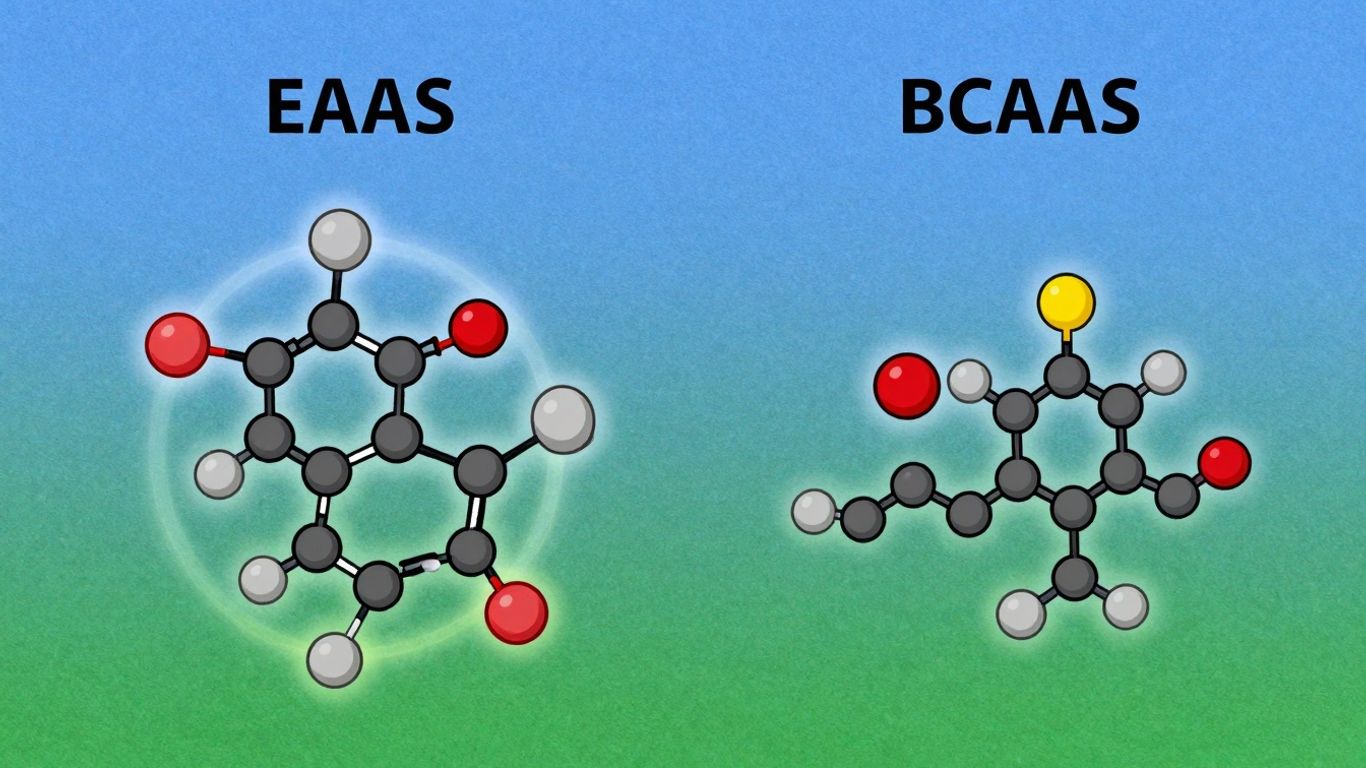
When we think about adding supplements to our routine, it's natural to wonder what actual benefits they might bring. For essential amino acids, or EAAs, the advantages are pretty clear, especially when we look at how they support our bodies. An essential amino acid supplement can offer a convenient way to make sure we're getting the full spectrum of these vital compounds.
Enhancing Muscle Growth and Repair
EAAs are the basic building blocks for muscle tissue. They play a direct role in muscle protein synthesis (MPS), the process by which our bodies build and repair muscle. Leucine, one of the EAAs, is particularly important as it acts like a switch, signalling the body to start building muscle. Research has shown that supplementing with EAAs can significantly boost MPS, especially when combined with resistance training [1]. This means that after a tough workout, your muscles can start repairing and growing more effectively. While BCAAs have been popular, EAAs provide the complete set of amino acids needed for full muscle repair, making them a more complete choice.
Reducing Muscle Soreness and Fatigue
We've all experienced that post-workout soreness, often called DOMS (delayed onset muscle soreness). EAAs can help to lessen this discomfort. Studies suggest that taking EAAs can reduce the severity of muscle soreness and help preserve muscle strength after strenuous exercise [2]. This is because EAAs aid in the recovery process, helping to reduce inflammation and damage caused by intense training. By speeding up recovery, EAAs allow us to get back to training sooner and with less discomfort. They also play a role in energy production, which can help combat feelings of fatigue during and after exercise, potentially improving endurance.
Supporting Cognitive Function and Energy
While the physical benefits of EAAs are well-known, their impact on our minds is also noteworthy. EAAs are precursors to neurotransmitters, the chemical messengers in our brain that influence mood, focus, and cognitive function. Ensuring adequate EAA intake can therefore support mental clarity and energy levels. During prolonged exercise, when our bodies might be running low on fuel, EAAs can also be converted into glucose, providing an alternative energy source and helping to delay fatigue. This metabolic flexibility is beneficial for both endurance athletes and those looking for sustained energy throughout the day. [54b5]
Who Benefits Most from EAA Supplements?
While everyone needs essential amino acids (EAAs) for basic bodily functions, certain groups tend to see more pronounced benefits from supplementation. It's not just for the hardcore gym-goer, though they certainly fall into this category. We've found that individuals facing specific dietary challenges or those pushing their bodies particularly hard often experience a significant positive impact.
Athletes and Regular Exercisers
For those who train frequently, especially with resistance exercises, EAAs are incredibly important. They are the building blocks for muscle protein synthesis, which is how our muscles repair and grow after exercise [1]. Without enough EAAs, this process can be hindered. Supplementation can help ensure that the body has a readily available supply to kickstart recovery and support muscle maintenance, even between demanding sessions. This is particularly true for athletes involved in endurance sports, where sustained energy and muscle protection are key [2].
Individuals with Dietary Restrictions
People following specific diets, such as veganism or vegetarianism, might find it harder to get a complete profile of EAAs from their food alone. While plant-based diets can be very healthy, some protein sources may be lower in certain EAAs. For instance, a vegan bundle might include EAA tablets to bridge this gap. Similarly, individuals on calorie-restricted diets may struggle to consume enough protein, making EAA supplements a practical way to maintain lean muscle mass without adding significant calories. For those looking to support their training and recovery, an EAA supplement can be a convenient option.
Older Adults and Muscle Health
As we age, maintaining muscle mass becomes increasingly important for overall health and mobility. Sarcopenia, the age-related loss of muscle mass, can be mitigated by adequate protein intake and, consequently, sufficient EAA availability. Supplementing with EAAs can help older adults preserve muscle strength and function, supporting independence and quality of life. This is because EAAs are vital for muscle protein synthesis, a process that can slow down with age if not properly supported [3].
Ultimately, if you're looking to optimise your body's ability to repair, rebuild, and function optimally, especially when under physical stress or facing dietary limitations, EAAs are worth considering.
The Advantage of a Complete EAA Profile
When we consider how our bodies work, especially after physical exertion, it becomes clear that having all the necessary components readily available makes a big difference. This is where the advantage of a complete Essential Amino Acid (EAA) profile really shines. Unlike just focusing on a subset, a full EAA profile provides everything the body needs to get to work.
Providing All Necessary Building Blocks
Think of your body like a construction site. You wouldn't try to build a house with just a few types of bricks, would you? You need all the different materials to complete the structure properly. EAAs are precisely that – the full set of nine essential amino acids that our bodies cannot produce on their own. These are the fundamental building blocks for protein synthesis, which is vital for repairing and building muscle tissue after exercise (Hulmi et al., 2010). When we consume a complete EAA supplement, we're giving our body the entire toolkit it requires, rather than just a few of the tools.
Supporting a Range of Bodily Functions
It's not just about muscles, though. The nine EAAs play roles in so many other bodily processes. They are precursors to neurotransmitters, which affect our mood and cognitive function, and they are involved in immune system support and hormone production (Church et al., 2020). So, by ensuring we have a steady supply of all EAAs, we're supporting more than just our physical recovery; we're contributing to our overall well-being and mental clarity.
Comprehensive Muscle Repair and Growth
While Branched-Chain Amino Acids (BCAAs) – leucine, isoleucine, and valine – are known to kickstart muscle protein synthesis, they can't complete the job alone. Leucine, in particular, acts as a signal, but without the presence of the other EAAs, the process can be limited (Tipton et al., 2001). A complete EAA profile ensures that once the signal is given, all the necessary building blocks are there to carry out the repair and growth effectively. This means that for anyone looking to maximise their muscle recovery and growth, a full spectrum of EAAs is generally considered more beneficial than BCAAs alone [9533].
The body's ability to synthesise proteins, regulate hormones, and perform numerous metabolic functions relies heavily on the availability of all nine essential amino acids. A consistent dietary supply is therefore paramount for maintaining physiological homeostasis and supporting cellular repair mechanisms.
Here's a quick look at how they stack up:
|
Feature |
Essential Amino Acids (EAAs) |
Branched-Chain Amino Acids (BCAAs) |
|---|---|---|
|
Number of Amino Acids |
Nine |
Three (Leucine, Isoleucine, Valine) |
|
Body Synthesis |
Cannot be produced by body |
Cannot be produced by body |
|
Role in Muscle |
Support entire MPS process |
Trigger MPS, need other EAAs |
|
Completeness |
All necessary building blocks |
Partial building blocks |
Dietary Sources of Essential Amino Acids

Getting enough of the nine essential amino acids (EAAs) is something we all need to think about, as our bodies can't make them on their own. Fortunately, a variety of foods can provide us with these vital compounds. We've found that understanding where to find them makes it much easier to build them into our daily meals.
Complete Protein Foods
Foods that contain all nine EAAs are often referred to as 'complete proteins'. These are generally animal-based products, which tend to be rich sources. We're talking about things like:
-
Beef
-
Poultry (chicken, turkey)
-
Fish (salmon, tuna, cod)
-
Eggs
-
Dairy products (milk, cheese, yogurt)
These foods are excellent for providing the best amino acids for muscle growth because they offer a full spectrum of EAAs in a readily usable form. For instance, studies have indicated that animal-based proteins are highly effective at stimulating muscle protein synthesis due to their EAA content [1].
Plant-Based Protein Considerations
While plant-based diets can be incredibly healthy, they often require a bit more planning to ensure a complete EAA profile. Many plant proteins are considered 'incomplete', meaning they might be lower in one or more of the nine EAAs. However, by combining different plant-based foods throughout the day, we can achieve a full EAA intake. Good examples of plant-based complete proteins include:
-
Soy products (tofu, tempeh, edamame)
-
Quinoa
-
Buckwheat
-
Hemp seeds
It's worth noting that while some plant sources might be lower in certain EAAs, they still contribute valuable nutrients. For example, legumes are often lower in methionine, while grains can be lower in lysine. Eating a varied diet helps to balance this out [2].
Ensuring Adequate Intake Through Diet
To make sure we're getting all the EAAs we need, we should aim for a balanced diet that includes a variety of protein sources. For those who train regularly, paying attention to protein intake around workouts can be particularly beneficial for muscle repair and growth. A consistent intake of complete proteins, or a well-planned combination of incomplete proteins, is key to supporting bodily functions and athletic performance.
The body requires all nine EAAs to effectively build and repair tissues. While some foods provide all of them, others may be deficient in specific ones. Careful dietary planning can bridge these gaps, ensuring optimal health and recovery.
References:
[1] Phillips, S. M. (2017). A brief review of higher dietary protein conversations and exercise. Sports Medicine, 47(S1), 127-131.
[2] Mariotti, F. (2017). Protein and amino acid considerations for vegetarian athletes. Journal of the Academy of Nutrition and Dietetics, 117(12), 2007-2017.
Comparing EAA and BCAA Supplement Effectiveness
When we look at supplements, it's easy to get a bit confused about what's what. You'll often hear about both Essential Amino Acids (EAAs) and Branched-Chain Amino Acids (BCAAs). While BCAAs are indeed a part of the EAAs, they don't offer the full picture when it comes to supporting our bodies, especially our muscles. Think of it like this: EAAs are the complete set of building blocks needed for protein, whereas BCAAs are just three specific blocks from that set. Research suggests that while BCAAs can kickstart the process of muscle protein synthesis, this process can stall if the other necessary EAAs aren't present [1].
The Limitations of BCAAs Alone
BCAAs, consisting of leucine, isoleucine, and valine, are popular because leucine, in particular, acts as a signal to initiate muscle protein synthesis. However, without the presence of the other six essential amino acids, the body can't effectively build new muscle tissue. This means that relying solely on BCAA supplements might not provide the complete support needed for optimal muscle repair and growth after exercise. It's like having the key to start a car but not having enough fuel to actually drive it anywhere.
The Comprehensive Approach of EAAs
An EAA supplement, on the other hand, provides all nine essential amino acids that our bodies cannot produce on their own. This complete profile means that when you take EAAs, you're giving your body all the necessary components to effectively build and repair muscle tissue, support various bodily functions, and aid in recovery. This comprehensive approach ensures that the muscle protein synthesis pathway has all the required ingredients to function optimally [2].
Maximising Muscle Protein Synthesis
For those looking to maximise muscle protein synthesis, a full EAA profile is generally considered more effective than BCAAs alone. Studies indicate that supplementing with EAAs can lead to greater increases in muscle protein synthesis compared to BCAAs, particularly when consumed around exercise [3]. This is because EAAs provide the entire spectrum of amino acids required for the complex process of muscle repair and growth. The protein building blocks comparison clearly shows that EAAs offer a more complete solution.
Here's a quick look at the key differences:
-
EAAs: All nine essential amino acids, providing a complete profile for muscle repair, growth, and other bodily functions.
-
BCAAs: Three specific amino acids (leucine, isoleucine, valine) that are part of the EAAs, primarily known for triggering muscle protein synthesis but requiring other EAAs to complete the process.
While BCAAs have their place, especially in signalling the start of muscle repair, a complete EAA profile is more beneficial for overall muscle recovery and growth because it supplies all the necessary components. It's about giving your body the full toolkit it needs to perform at its best.
References:
[1] Tipton, K. D., et al. (2001). American Journal of Physiology – Endocrinology and Metabolism, 281(2), E197–E206. PubMed – PMID 11440894
[2] Moberg, M., et al. (2021 ). Frontiers in Physiology, 12, 664967. PubMed – PMID 27053525
[3] Jackman, S. R., et al. (2010 ). Journal of Strength and Conditioning Research, 24(10), 2716–2723. PubMed – PMID 19997002
Practical Considerations for Supplement Use
When we decide to incorporate essential amino acid (EAA) supplements into our routine, a few practical points come to mind. It's not just about grabbing the first bottle we see; we need to think about how much to take, when to take it, and what to look for in a quality product. These details can make a real difference in how effective the supplementation is for our individual goals, especially for supplementation for athletes.
Dosage Recommendations for EAAs
Figuring out the right amount of EAAs can feel a bit like guesswork, but research offers some guidance. Generally, a dose of around 10-20 grams per serving is considered effective for promoting muscle protein synthesis and aiding recovery (Tipton et al., 2001). However, it's often advised to start with a lower dose, perhaps around 5 grams, to see how your body responds. This is particularly true if you're new to EAA supplements or have a sensitive digestive system. The exact amount can also depend on your body weight, activity level, and overall dietary intake of protein.
Timing of Supplement Intake
The timing of your EAA supplement can be quite important, especially around your training sessions. Taking EAAs before, during, or immediately after exercise can help provide your muscles with the necessary building blocks for repair and growth. Some studies suggest that consuming EAAs around the workout window can help reduce muscle breakdown and speed up recovery (Jackman et al., 2010). For instance, having an EAA drink about 30 minutes before a workout, or even during a long training session, might help maintain energy levels and reduce fatigue. It's not a strict rule, though; consistent daily intake is also beneficial for overall amino acid status.
Choosing High-Quality Products
When we're looking at EAA supplements, the quality of the product really matters. We want to make sure we're getting a pure, effective formula. Look for products that clearly list all nine essential amino acids and ideally specify the amounts of each, particularly leucine, which is a key trigger for muscle protein synthesis. It's also wise to choose brands that are transparent about their manufacturing processes and ideally have third-party testing to verify purity and potency. Avoiding supplements with unnecessary fillers, artificial colours, or excessive sweeteners is generally a good idea. Checking for certifications like GMP (Good Manufacturing Practice) can also give us confidence in the product's quality.
We've found that focusing on a complete EAA profile, rather than just BCAAs, provides a more robust support system for muscle repair and growth. This ensures that all the necessary components are available for optimal protein synthesis, which is vital for recovery and adaptation to training.
When thinking about using supplements, it's smart to consider a few things. Make sure you're choosing quality products that are right for you. It's always a good idea to do a bit of research. For trusted advice and a great selection of supplements, check out our website. We're here to help you make informed choices for your well-being.
So, What's the Verdict?
Right then, after looking at all this, it seems pretty clear that while BCAAs have their moment, EAAs are the real all-rounders when it comes to supporting our bodies. They give us the full set of building blocks we need for muscle repair and growth, and they do a bit more besides, like helping with energy and even brain function. For most of us, especially if we're training regularly or just want to keep our bodies in good nick, opting for a full EAA supplement makes more sense than just grabbing BCAAs. It’s about giving ourselves the complete package for recovery and overall well-being. Of course, getting these from a balanced diet is always the first port of call, but if you're looking to top things up, EAAs seem to be the way to go.
Related products:
Frequently Asked Questions
What exactly are Essential Amino Acids (EAAs)?
Essential Amino Acids, or EAAs, are the nine building blocks for protein that our bodies cannot create on their own. We must get them from the food we eat or through supplements. They are crucial for many bodily functions, including repairing and building muscles, making hormones, and supporting our immune system.
How are Branched-Chain Amino Acids (BCAAs) different from EAAs?
Think of EAAs as the complete set of nine essential building blocks, while BCAAs are just a small group of three within that set: leucine, isoleucine, and valine. While BCAAs are important, especially for kicking off muscle repair, they can't do the whole job alone. EAAs provide all the necessary components for full muscle growth and repair.
Why are EAAs considered more beneficial than just BCAAs for muscle growth?
EAAs offer a more complete package. They provide all nine essential building blocks that our bodies need to effectively build and repair muscle tissue. BCAAs can start the process, but without the other EAAs present, muscle protein synthesis can be limited. It's like having all the tools versus just a few – you need the full set for the best results.
Who would benefit most from taking EAA supplements?
While everyone needs EAAs, certain groups find them particularly helpful. Athletes and those who exercise regularly can benefit from faster muscle repair and reduced soreness. Individuals with dietary restrictions, like vegans or vegetarians, might find it easier to get all nine EAAs through supplements. Older adults can also benefit from EAA support to maintain muscle health as they age.
Can I get enough EAAs from my diet alone?
Yes, it's certainly possible to get all your EAAs from food. Foods like meat, fish, eggs, and dairy are complete protein sources, meaning they contain all nine EAAs. For those following plant-based diets, it requires a bit more planning by combining different foods like soy, quinoa, beans, and nuts to ensure a full spectrum of EAAs is consumed.
What are the main benefits of taking EAA supplements?
EAA supplements can significantly help in muscle growth and repair after exercise. They can also reduce muscle soreness and fatigue, allowing for quicker recovery. Beyond physical benefits, EAAs play a role in supporting brain function and can contribute to overall energy levels.
When is the best time to take EAA supplements?
The timing can be flexible, but many find it beneficial to take EAAs around their workouts. This could be before, during, or after exercise to support muscle repair and recovery. Some people also take them at other times of the day to help meet their daily EAA needs or to support energy levels.
How much EAA supplement should we take?
A common recommendation is around 5 grams of EAAs per day. This amount can help support lean muscle mass, improve workout quality, and manage appetite. However, it's always a good idea to check the specific product's instructions or consult with a healthcare professional to determine the best dosage for your individual needs.

Ben Law is the founder of Love Life Supplements and host of the Optimised Health Show. He is a qualified Advanced Dietary Supplement Advisor and has spent over a decade formulating research-led supplements manufactured under strict UK GMP and BRC standards. Learn more about Ben.