


When we're trying to get healthier and fitter, it's really helpful to understand what essential amino acids are all about. These things are like the basic building blocks for protein and do a lot of important jobs in our bodies, from building muscle to helping our brains work well. We've put together this guide to explain the basics of essential amino acids, what they do, and how supplements might help you reach your fitness goals.
Key Takeaways
- Essential amino acids, or EAAs, are the nine amino acids our bodies can't make but need for muscle repair, recovery, making hormones, enzymes, and energy. Without enough, training suffers, recovery slows, and keeping muscle becomes harder.
- EAAs are better than just BCAAs because they give your body all the building blocks it needs for muscle repair and growth, not just three.
- Taking about 5 grams of EAAs daily can help with lean muscle, training quality, appetite control, and energy, no matter how you train.
- You can get EAAs from foods like eggs, chicken, fish, dairy, soy, and quinoa. However, plant-based diets might need extra attention to ensure all nine EAAs are covered.
- Supplements offer a convenient way to get EAAs, especially for athletes, people with dietary limits, or older adults concerned about muscle health. Look for pure, third-party tested products.
A Note from Ben, Founder of Love Life Supplements
I created our Essential Aminos range to solve a problem I kept seeing in the supplement industry: underdosed formulas, cheap synthetics and products relying only on BCAAs. The evidence is very clear. You need the full spectrum of all nine EAAs for genuine muscle repair, resilience and metabolic support. Anything less is incomplete.
We use fermented, high-quality amino acids because they digest smoothly and feel clean, especially around training. Our tablets are perfect for fasting windows, travel or low-calorie mornings. The flavoured powders work brilliantly intra-workout or between meals, giving you a boost without calories or heavy digestion.
I personally use EAAs most mornings before training or on days when my protein intake is lighter. It keeps energy stable, recovery consistent and helps maintain lean mass even on hectic work days.

Stay strong,
Ben Law
Founder, Love Life Supplements
Understanding Essential Amino Acids
What Are Essential Amino Acids?
We often hear about amino acids as the building blocks of protein, which is true. But not all amino acids are created equal, at least not in terms of how our bodies get them. There are 20 common amino acids, and our bodies can actually make about half of them. The other half, however, are what we call essential amino acids. These nine essential amino acids are compounds our bodies absolutely need, but they can't produce them on their own, meaning we have to get them from the food we eat or from supplements. [Lopez & Mohiuddin, 2022]. Think of them as the 'perfect amino acids' that our system relies on for many jobs.
The Nine Essential Amino Acids
So, which ones are these vital nine? They are histidine, isoleucine, leucine, lysine, methionine, phenylalanine, threonine, tryptophan, and valine. You might recognise leucine amino acid as one of them; it's particularly well-known for its role in muscle building. Together, these nine form the complete set that our bodies can't synthesise. It's important to get all of them because they work together to help build proteins, which are used for pretty much everything in our bodies, from muscle tissue to enzymes. [National Research Council, 1989].
Why Are They 'Essential'?
The term 'essential' really just highlights their dietary necessity. Without a regular supply from our diet, our bodies simply can't function optimally. They are required for a multitude of bodily processes, including muscle protein synthesis, which is how our muscles repair and grow after exercise. [Hulmi et al., 2010]. They also play roles in immune function, hormone production, and even neurotransmitter synthesis, which affects our mood and cognitive function. [Church et al., 2020].
Without these specific amino acids, our bodies would struggle to perform basic functions. It's not just about building big muscles; it's about maintaining overall health and ensuring our systems run smoothly day to day.
Here's a quick look at the nine:
- Histidine
- Isoleucine
- Leucine
- Lysine
- Methionine
- Phenylalanine
- Threonine
- Tryptophan
- Valine
The Crucial Role of Essential Amino Acids
Supporting Muscle Protein Synthesis
We often hear about amino acids in the context of building muscle, and for good reason. Essential amino acids (EAAs) are the direct building blocks for muscle protein. When we exercise, particularly with resistance training, we create tiny tears in our muscle fibres. To repair and rebuild these fibres stronger, our bodies need a sufficient supply of EAAs. Leucine, in particular, is known to be a key trigger for muscle protein synthesis (MPS), the process by which our cells build new proteins [1]. Without enough EAAs, this repair process is significantly hampered, impacting muscle growth and recovery.
Beyond Muscle: Other Bodily Functions
While muscle is a major player, EAAs do so much more. They are involved in the production of enzymes and hormones that regulate countless bodily processes. For instance, they play a part in immune function, helping our bodies fight off infections. They also contribute to the maintenance and repair of all body tissues, not just muscle. Think of them as tiny construction workers, constantly on call to fix and build wherever needed throughout the body [2].
Impact on Cognitive Health
It might surprise you to learn that EAAs also have a significant impact on our brain function. Certain EAAs are precursors to neurotransmitters, the chemical messengers that allow our nerve cells to communicate. For example, phenylalanine is a precursor to tyrosine, which in turn is used to make dopamine and norepinephrine, neurotransmitters vital for mood, focus, and alertness [3]. A deficiency in specific EAAs can therefore manifest as fatigue, reduced mental sharpness, or even mood disturbances [4]. Ensuring we get a full spectrum of EAAs supports not just our physical health, but our mental well-being too.
Essential Amino Acids Versus Branched-Chain Amino Acids
Defining BCAAs
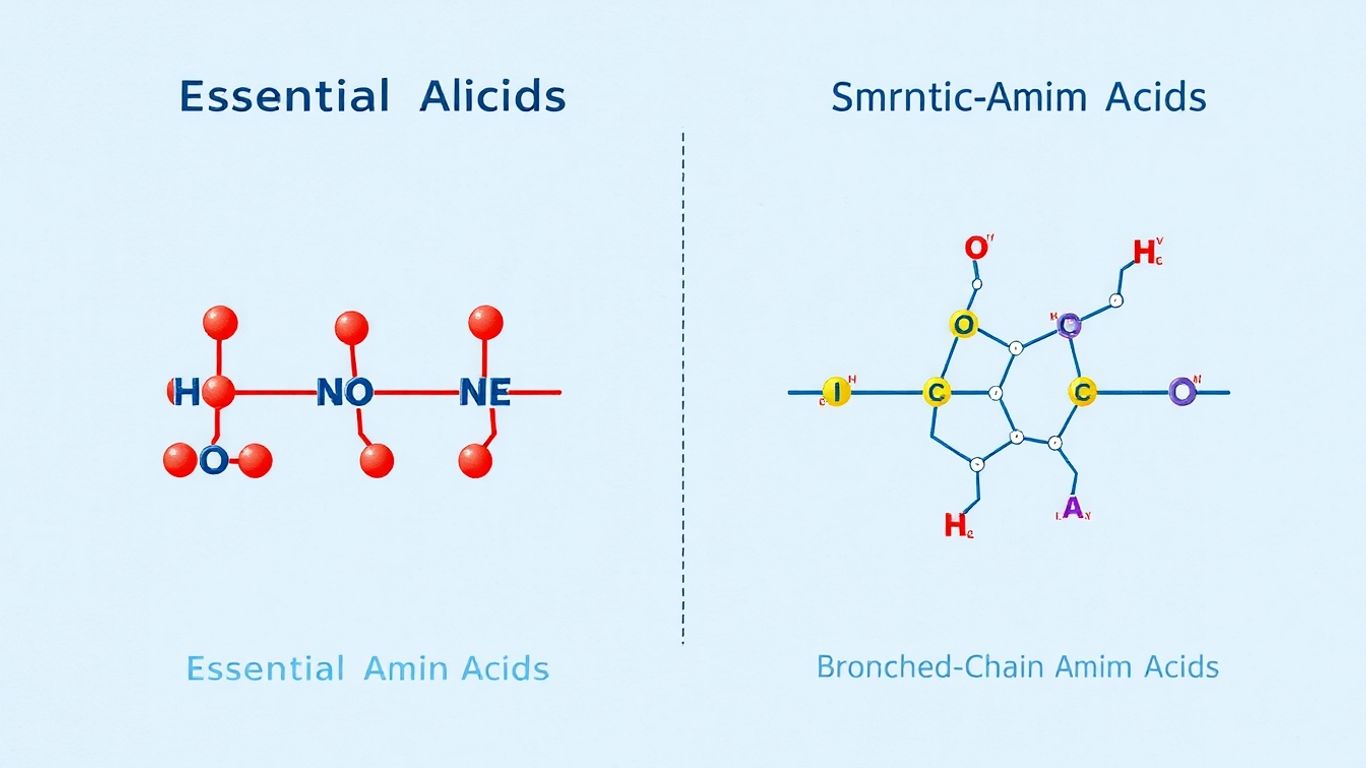
When we talk about amino acids, you'll often hear about two main groups: Essential Amino Acids (EAAs) and Branched-Chain Amino Acids (BCAAs). Let's clear up what these are. BCAAs are a specific subset of the EAAs. There are three of them: leucine, isoleucine, and valine. They're called 'branched-chain' because of their unique molecular structure. These three are particularly well-known for their role in muscle metabolism and recovery.
How EAAs Differ from BCAAs
The main difference is quite simple: EAAs are the complete set, while BCAAs are just a part of that set. Remember, there are nine EAAs that our bodies can't make, and we need all of them for various functions, including building new proteins. BCAAs are three of those nine EAAs. So, while BCAAs play a role, they can't do the whole job on their own. Think of it like building a house; you need all the different types of bricks, not just three specific ones, to complete the structure. Research suggests that while BCAAs can kickstart muscle protein synthesis, the process stalls if the other EAAs aren't present [1].
The Advantage of a Complete EAA Profile
Because EAAs include all nine essential amino acids, they offer a more comprehensive approach. Consuming a full spectrum of EAAs means your body has all the necessary building blocks readily available. This supports not only muscle protein synthesis but also a range of other bodily functions, from neurotransmitter production to immune support [2]. For instance, leucine, one of the BCAAs, is a key trigger for muscle protein synthesis, but without the other EAAs, the repair and growth process is limited [3].
Here's a quick look at how they stack up:
| Feature | Essential Amino Acids (EAAs) | Branched-Chain Amino Acids (BCAAs) |
|---|---|---|
| Number of Amino Acids | Nine | Three (Leucine, Isoleucine, Valine) |
| Body Synthesis | Cannot be produced by the body | Cannot be produced by the body (they are a subset of EAAs) |
| Role in Muscle | Support the entire process of muscle protein synthesis | Trigger muscle protein synthesis, but require other EAAs to complete |
| Completeness | Provide all necessary building blocks for protein | Provide only a portion of the building blocks for protein |
While BCAAs have their place, especially in triggering muscle repair processes, a complete EAA profile is generally considered more beneficial for overall muscle growth and recovery because it supplies all the required components. This ensures that the body has everything it needs to effectively rebuild and repair tissues after exercise.
So, if you're looking to support your body's recovery and muscle maintenance comprehensively, focusing on a complete EAA intake makes a lot of sense. It's about giving your body the full toolkit it needs to perform at its best.
Dietary Sources of Essential Amino Acids
Getting enough of the nine essential amino acids (EAAs) is something we all need to think about, as our bodies can't make them on their own. Fortunately, a variety of foods can provide us with these vital compounds. We've found that understanding where to find them makes it much easier to build them into our daily meals.
Complete Protein Foods
Foods that contain all nine EAAs are often referred to as 'complete proteins'. These are generally animal-based products, which tend to be rich sources. We're talking about things like:
- Beef
- Poultry (chicken, turkey)
- Fish (salmon, tuna, cod)
- Eggs
- Dairy products (milk, cheese, yogurt)
These foods offer a straightforward way to get a full spectrum of EAAs in one go. For instance, a serving of grilled chicken or a bowl of Greek yogurt can contribute significantly to our daily EAA needs (Lopez & Mohiuddin, 2022).
Plant-Based Protein Considerations
For those following plant-based diets, getting all nine EAAs requires a bit more planning, but it's certainly achievable. While many plant foods contain some EAAs, few offer the complete profile found in animal products. However, certain plant sources are considered complete proteins, such as:
- Soy products (tofu, tempeh, edamame)
- Quinoa
- Buckwheat
Other plant-based foods like nuts, seeds, legumes (beans, lentils), and grains provide a good mix of EAAs, but they might be lower in one or two specific types. By combining different plant-based foods throughout the day, we can create a balanced intake of all the necessary amino acids. For example, pairing rice and beans, or having a salad with nuts and seeds, helps to cover our bases (Church et al., 2020).
Ensuring Adequate Intake Through Diet
Making sure we consume enough EAAs daily is key for overall health and bodily functions. It's not just about muscle building; EAAs are involved in countless processes, from neurotransmitter production to immune function.
The body's ability to synthesise proteins, regulate hormones, and perform numerous metabolic functions relies heavily on the availability of all nine essential amino acids. A consistent dietary supply is therefore paramount for maintaining physiological homeostasis and supporting cellular repair mechanisms.
We've found that paying attention to the variety in our diet is the best approach. If we're unsure about our intake, or if we have specific dietary restrictions, considering supplementation might be a good idea, but it's always best to speak with a healthcare professional first.
| Food Group | Examples | EAA Profile |
|---|---|---|
| Animal Products | Meat, Fish, Eggs, Dairy | Complete (all 9 EAAs) |
| Legumes | Beans, Lentils, Peas | Incomplete (often lower in methionine) |
| Grains | Rice, Wheat, Oats | Incomplete (often lower in lysine) |
| Nuts & Seeds | Almonds, Walnuts, Chia Seeds, Flax Seeds | Incomplete (variable EAA profiles) |
| Soy Products | Tofu, Tempeh, Edamame | Complete (considered a complete plant protein) |
| Pseudocereals | Quinoa, Buckwheat | Complete (considered complete plant proteins) |
| Vegetables | Broccoli, Spinach | Generally low in EAAs, but contribute micronutrients |
This table gives a general overview, and the exact EAA content can vary based on preparation and specific type of food.
Who Benefits Most from Essential Amino Acid Supplementation?
While everyone needs essential amino acids (EAAs) for basic bodily functions, certain groups tend to see more pronounced benefits from supplementation. It's not just for the hardcore gym-goer, though they certainly fall into this category. We've found that individuals facing specific dietary challenges or those pushing their bodies particularly hard often experience a significant positive impact.
Athletes and Regular Exercisers
For those who train frequently, especially with resistance exercises, EAAs are incredibly important. They are the building blocks for muscle protein synthesis, which is how our muscles repair and grow after exercise [3]. Without enough EAAs, this process can be hindered. Supplementation can help ensure that the body has a readily available supply to kickstart recovery and support muscle maintenance, even between demanding sessions. This is particularly true for athletes involved in endurance sports, where sustained energy and muscle protection are key [2].
Individuals with Dietary Restrictions
People following specific diets, such as veganism or vegetarianism, might find it harder to get a complete profile of EAAs from their food alone. While plant-based diets can be very healthy, some protein sources may be lower in certain EAAs. For instance, a vegan bundle might include EAA tablets to bridge this gap [a4a9]. Similarly, individuals on calorie-restricted diets may struggle to consume enough protein, making EAA supplements a practical way to maintain lean muscle mass without adding significant calories.
Older Adults and Muscle Health
As we age, our bodies can become less efficient at utilising protein for muscle building. This can lead to a gradual loss of muscle mass, a process known as sarcopenia. Research suggests that EAA supplementation can be particularly beneficial for older adults, helping to support muscle protein synthesis and maintain lean body mass over time [6]. This can contribute to better mobility and overall physical function in later life.
It's worth noting that even on rest days, EAAs play a role in maintaining a positive protein balance, which is beneficial for recovery and overall health, not just during intense training periods.
Here's a quick look at who might gain the most:
- Strength Athletes: Need rapid recovery between intense workouts.
- Endurance Athletes: Benefit from sustained energy and muscle protection during long events.
- Vegans/Vegetarians: May need help ensuring a complete EAA intake.
- Those on Calorie Deficits: To help preserve muscle mass.
- Older Adults: To combat age-related muscle loss.
Optimising Your Essential Amino Acid Intake
Timing Your EAA Supplementation
When we think about taking supplements, timing often comes up. For EAAs, it's not quite as rigid as some other supplements, but there are definitely smart times to consider taking them. If you're exercising, taking EAAs around your workout can be beneficial. Research suggests that consuming EAAs before or during exercise might help reduce muscle breakdown and kickstart the recovery process [1]. Think of it as giving your muscles the building blocks they need right when they're working hard.
For those who practice intermittent fasting, EAAs can be a useful tool. Since they are typically very low in calories, they can be taken during a fasting window without breaking the fast, potentially helping to preserve muscle mass [2]. We also find that taking them first thing in the morning, especially if your breakfast is delayed or lower in protein, can help stabilise energy levels and support your body's needs before the day really gets going.
Dosage Considerations
Figuring out the right amount of EAAs to take can feel a bit like guesswork, as there isn't one single, universally agreed-upon dose for everyone. The amount you might need can depend on a few things, like your body weight, activity level, and overall diet. Some studies suggest that around 10-20 grams of EAAs per serving can be effective for stimulating muscle protein synthesis [3]. However, it's always wise to start with a lower dose and see how your body responds.
We've noticed that many EAA supplements come with their own serving suggestions, which are usually a good starting point. Always check the product label. If you're unsure, speaking with a healthcare professional or a registered dietitian can provide personalised guidance. Remember, more isn't always better; finding that sweet spot is key.
Integrating EAAs with Other Supplements
When building a supplement routine, it's natural to wonder how EAAs fit in with everything else. Generally, EAAs play well with others. They can be taken alongside protein powders, creatine, or pre-workout formulas. For instance, if you're using a protein powder that's lower in EAAs, adding an EAA supplement can round out its profile. We often see people taking EAAs intra-workout, perhaps mixed with a hydration drink, while others might take them post-workout with a whey protein shake.
It's important to remember that EAAs are building blocks. They work best when they're part of a balanced approach that includes adequate overall protein intake from whole foods, consistent training, and sufficient rest. Supplements should complement, not replace, these foundational elements of health and fitness.
Here's a general idea of how EAAs might fit into a daily intake:
- Pre- or Intra-Workout: To support energy and reduce muscle breakdown during exercise.
- Post-Workout: To aid in muscle repair and recovery, often combined with other recovery aids.
- Between Meals or During Fasting: To maintain muscle protein synthesis and manage hunger without significant calories.
- With Lower Protein Meals: To boost the EAA content of a meal.
It's always a good idea to read the labels of all your supplements and consult with a professional if you have any concerns about interactions or optimal timing for your specific needs [4].
Benefits of Essential Amino Acid Supplements
When we consider adding supplements to our routine, it's natural to wonder what tangible benefits they might bring. For essential amino acids, or EAAs, the advantages are quite clear, especially when we look at how they support our bodies. An eaa supplement can offer a convenient way to ensure we're getting the full spectrum of these vital compounds.
Convenience and Accessibility
Life can get busy, and sometimes getting all the nutrients we need from food alone feels like a challenge. This is where an eaa supplement really shines. It provides a straightforward and portable way to get all nine essential amino acids, which our bodies can't produce on their own. This is particularly helpful for those with demanding schedules or anyone who finds it tricky to consistently consume enough EAAs through their diet. It means we don't have to worry as much about meal timing or food preparation to get our amino acid fix.
Supporting Recovery and Reducing Fatigue
After a tough workout, our muscles need to repair and rebuild. EAAs are the building blocks for this process. Studies suggest that supplementing with EAAs can help kickstart muscle protein synthesis, which is key for recovery [1]. This means less time spent feeling sore and more time ready for the next training session. Furthermore, EAAs play a role in energy production, potentially helping to reduce feelings of fatigue during and after exercise. This can lead to improved training quality and overall endurance.
Maintaining Lean Muscle Mass
Keeping hold of lean muscle mass is important for everyone, not just athletes. EAAs are critical for muscle protein synthesis, the process that builds and repairs muscle tissue [2]. When we don't get enough EAAs, our bodies might break down existing muscle for energy, which is something we want to avoid. By providing a complete profile of essential amino acids, an eaa supplement can help signal to the body that there are enough building blocks available, thus supporting the maintenance of lean muscle mass, even during periods of calorie restriction or intense training [3].
The body relies on essential amino acids for a multitude of functions beyond just muscle repair. They are involved in creating neurotransmitters that affect mood and cognitive function, supporting the immune system by helping to produce antibodies, and even playing a role in hormone production. Ensuring adequate intake through diet or supplementation means we're supporting these wider bodily processes too.
Here's a look at how EAAs can contribute:
- Muscle Protein Synthesis: EAAs, especially leucine, are known to trigger the pathways that build muscle [1, 2].
- Reduced Muscle Breakdown: They can help protect muscles from being broken down for energy during strenuous activity [4].
- Energy Levels: EAAs contribute to energy pathways, potentially offering a sustained energy boost without the jitters associated with stimulants.
- Recovery: By aiding muscle repair, EAAs can shorten recovery times between workouts.
| Benefit Area | How EAAs Help |
|---|---|
| Muscle Repair | Provide the necessary building blocks for tissue repair. |
| Fatigue Reduction | Support energy production pathways. |
| Lean Mass Maintenance | Signal muscle protein synthesis, preventing breakdown. |
References: [1] Church, D. D., Hirsch, K. R., Park, S., Kim, I. Y., Gwin, J. A., Pasiakos, S. M., Wolfe, R. R., & Ferrando, A. A. (2020). Essential Amino Acids and Protein Synthesis: Insights into Maximizing the Muscle and Whole-Body Response to Feeding. Nutrients, 12(12), 3717. PubMed [2] Hulmi, J. J., Lockwood, C. M., & Stout, J. R. (2010 ). Effect of protein/essential amino acids and resistance training on skeletal muscle hypertrophy: A case for whey protein. Nutrition & Metabolism, 7, 51. PubMed [3] Lopez, M. J., & Mohiuddin, S. S. (2023 ). Biochemistry, Essential Amino Acids. In StatPearls. StatPearls | PubMed [4] Atherton, P. J., & Smith, K. (2012 ). Muscle protein synthesis in response to nutrition and exercise. The Journal of Physiology, 590(5), 1049–1057. PubMed
Choosing Quality Essential Amino Acid Supplements
When we look for an eaa powder or any complete amino acid supplement, it's easy to get overwhelmed by all the options. We want something that actually works, right? It’s not just about grabbing the first tub we see. We need to think about what’s inside and where it comes from.
Prioritising Purity and Third-Party Testing
We always check if a product has been tested by an independent lab. This is a big one for us. It means someone outside the company has checked to make sure what’s on the label is actually in the tub. It helps us avoid nasty surprises and ensures we’re getting what we pay for. Reputable brands often display these certifications clearly. For instance, looking for seals from organisations that test for contaminants and verify ingredient accuracy gives us peace of mind. It’s like getting a second opinion before making a big decision.
Understanding Ingredient Labels
Reading ingredient lists can feel like deciphering a secret code sometimes. We look for a clear breakdown of the nine essential amino acids. Some products might list them all, while others might focus more on BCAAs, which isn't ideal if we're after a full spectrum. We also keep an eye out for unnecessary fillers or artificial sweeteners, especially if we're sensitive to them. A good label should be straightforward, telling us exactly what we're consuming. We've found that a simple list of EAAs, often with their specific amounts, is the clearest indicator of a quality product. Remember, a bcaa powder alone won't provide the full range of benefits that a complete EAA supplement does [1].
Reputable Supplement Brands
We tend to stick with brands we know and trust. Doing a bit of research into a company’s background and their manufacturing practices can tell us a lot. Are they transparent about their sourcing? Do they have good reviews from other users? We’ve found that brands committed to quality control and customer satisfaction usually stand out. It’s worth spending a little extra time to find a brand that aligns with our values and provides a reliable product. We've seen that brands that invest in high-quality, fermented amino acids often provide a cleaner product that digests well [2].
When selecting an EAA supplement, we prioritise transparency and verifiable quality. This means looking beyond the marketing claims and focusing on objective measures like third-party testing and clear, honest ingredient lists. Our goal is to find a product that supports our health and fitness without introducing unwanted additives or questionable ingredients.
| Feature | Importance |
|---|---|
| Third-Party Testing | Verifies ingredient accuracy and checks for contaminants. |
| Complete EAA Profile | Includes all nine essential amino acids for maximum benefit. |
| Ingredient Clarity | Easy-to-understand list of EAAs, minimal fillers or artificial additives. |
| Brand Reputation | Established brands with transparent manufacturing and positive user feedback. |
References: [1] Lopez, M. J., & Mohiuddin, S. S. (2023). Biochemistry, Essential Amino Acids. In StatPearls. StatPearls Publishing. StatPearls | PubMed [2] Law, B. (n.d. ). Ben Law – Founder. Love Life Supplements. Retrieved March 20, 2026, from https://www.lovelifesupplements.co.uk/pages/ben-law-primal
When picking out good essential amino acid supplements, it's important to know what to look for. These are the building blocks your body needs, so choosing the right ones can make a big difference. Don't just grab the first bottle you see; take a moment to check the ingredients and make sure they're pure and effective. For top-notch options that you can trust, head over to our website to explore our range.
Wrapping Up: Your EAA Journey
So, we've gone over what essential amino acids are and why they're quite important for our bodies. It turns out, these nine little helpers can't be made by us, so we really do need to get them from our food or supplements. Whether you're hitting the gym hard or just trying to keep things ticking over health-wise, making sure you've got enough EAAs could really make a difference. It's not just about muscles, either; they play a part in other bits and bobs too. If you're thinking about adding them to your routine, it's always a good idea to chat with someone who knows their stuff, like a trainer or a doctor, just to make sure you're doing what's best for you. Getting your nutrition right is a big part of feeling good, and EAAs are definitely a piece of that puzzle.
Frequently Asked Questions
What exactly are essential amino acids?
We can think of essential amino acids, or EAAs, as the nine vital building blocks that our bodies absolutely need but can't make on their own. We have to get them from the food we eat or from supplements. They're super important for all sorts of jobs in our bodies, like building muscle and keeping everything running smoothly.
Why are they called 'essential'?
They're called 'essential' because our bodies simply cannot produce them. Imagine them like essential ingredients for a recipe; if you don't have them, the recipe won't turn out right. We need them for protein creation, which is crucial for muscle repair, growth, and many other bodily functions. Without them, we'd be missing out on key components for staying healthy and strong.
How do EAAs help with muscle building?
EAAs are like the construction workers for our muscles. They provide the necessary materials to build and repair muscle tissue, especially after we've exercised. One EAA, called leucine, is particularly good at kicking off the process of muscle protein synthesis, which is how our muscles grow and get stronger.
Are EAAs different from BCAAs?
Yes, they are related but different! BCAAs (Branched-Chain Amino Acids) are actually a group of three EAAs (leucine, isoleucine, and valine). So, all BCAAs are EAAs, but not all EAAs are BCAAs. Taking EAAs gives you the full set of nine essential building blocks, whereas BCAAs only provide three. For complete muscle support, EAAs are generally considered more comprehensive.
What foods provide essential amino acids?
We can find EAAs in many protein-rich foods. Things like eggs, chicken, fish, dairy products (like milk and cheese), and even some plant-based options such as soy and quinoa are good sources. Eating a varied diet with different protein types helps ensure we get all nine EAAs we need.
Who might benefit most from taking EAA supplements?
Anyone looking to support their fitness goals can benefit. This includes athletes and people who exercise regularly, as EAAs help with muscle repair and recovery. It can also be helpful for individuals who have dietary restrictions that make it hard to get enough EAAs from food, or older adults who may find their bodies less efficient at using protein.
Can we take EAAs every day?
Yes, we can safely take EAAs every day. They are the same amino acids found naturally in the protein we eat, so they are generally well-tolerated. Taking them daily can help consistently support our body's needs for muscle maintenance and overall health.
Do EAAs break a fast?
Technically, yes, EAAs can activate the body's protein-building processes, which is considered breaking a fast for some goals. However, because they are very light on digestion and don't contain calories, many people still choose to take them during fasting periods, especially before an early morning workout, to get the benefits without a heavy meal.
👉 Shop Essential Amino Acids Now
Ben Law is the founder of Love Life Supplements and host of the Optimised Health Show. He is a self-confessed health, fitness and primal living fanatic and a qualified Advanced Dietary Supplement Advisor and Primal Blueprint Certified Expert. Over the last decade, Ben has helped thousands of UK customers optimise performance and recovery with transparent, research-led formulations manufactured to UK GMP and BRC standards. Learn more about Ben.